Diamond Origin: Natural Diamonds vs. Lab Grown Diamonds
The 4Cs of Diamonds
Selecting the perfect diamond starts with a little education. We begin with the 4 Cs: Color, Clarity, Cut and Carat Weight.
Understanding Diamond Color
Color differences between diamond grades can sometimes be nearly invisible to the naked eye. Choosing a slightly lower color grade can deliver exceptional beauty and greater value, without paying for differences you may never notice.

Understanding Diamond Clarity
Not all inclusions affect a diamond’s beauty. Many are invisible to the naked eye, making an eye-clean diamond with a lower clarity grade a smart way to maximize beauty and value without paying for perfection that can't be seen.

Diamond Measurements & Proportions
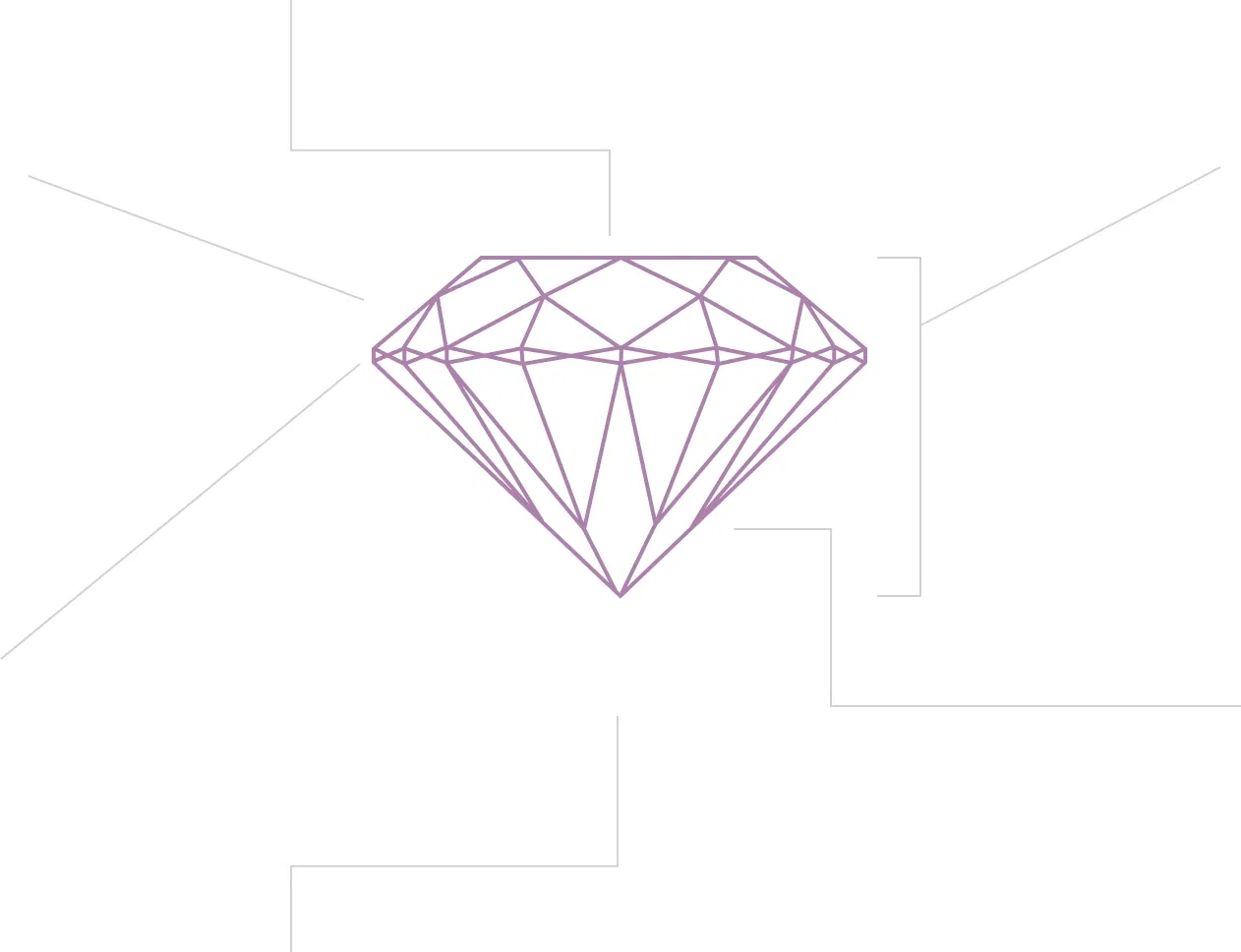
The measurement and proportions of a diamond define its overall visual appeal. Some diamonds are cut to emphasize the total carat weight, while others are designed to enhance brilliance and luster. Diamond cutters use the natural growth characteristics of a diamond to determine the optimal proportion to enhance each diamond's unique personality.
Crown
When a diamond’s crown is cut at an ideal angle, the jewel will yield optimal sparkle and fire. If the crown angle is too steep, the jewel will display limited sparkle when viewed from overhead. If the crown angle is too shallow, the diamond could seem flat and translucent.
Girdle
The girdle is typically a thin edge of the diamond where it can be held by the setting.
Table
The top facet of a diamond is the table. If the table is out of proportion to the body of the diamond, it will negatively affect the brilliance and fire.
Culet
The bottom point or facet of the diamond is the culet. A small, flat face at the culet is undesirable for a round cut diamond, but may provide positive characteristics for other shapes and styles.
Depth
Depth of a diamond is measured by drawing an imaginary line between the center of the Top (table) and bottom (culet) facets.
Pavilion
Much like the crown angle, the pavilion affects sparkle and brilliance. When cut properly. the pavilion will emit the most sparkle through the top of the jewel. Cutting too shallow limits sparkle and makes the diamond seem glasslike. If the angle is too large the diamond will not emit optimal sparkle.
Shop Diamonds by Shape


WHAT ELSE IS IMPORTANT?
Additional Diamond Grading Criteria
Additional Diamond Grading Criteria

Polish
Grading for polish quality refers to the overall craftsmanship of the finished diamond. Are the edges sharp? Are the facets smooth and flat? Polishing wheel marks should not be visible without magnification.

Symmetry
Symmetrical diamonds reflect more light, adding to the overall sparkle. Gemologists review more than 20 different symmetry features in order to grade how perfectly the facets and cut angles align.

Fluorescence
Fluorescence measures the intensity of the light emitted by a diamond under an ultraviolet light. Around 30% of diamonds exhibit some level of fluorescence. Fluorescence can affect the overall value of a diamond.
Graded on Paper. Chosen in Person.
Traditional proportions, grading standards, and certifications provide valuable guidance, but they don’t tell the whole story. Every diamond is unique, and beauty isn’t always defined by a ratio, grade, or specification on paper. At Diamonds Direct, our experts hand-select diamonds for their individual beauty, not simply their grades. We’re here to help you explore different shapes and proportions in person, compare what catches your eye, and discover the diamond that speaks to you. Because a grading report describes a diamond, it doesn’t define its beauty.


Colored Diamonds & Rare Gemstones
Extraordinary by Nature. One of a Kind.
Direct Done Differently

Direct Access. Exceptional Value.
Our global sourcing relationships and direct-to-you model deliver extraordinary selection, handpicked diamonds, and exceptional value without the traditional middlemen.

Complimentary Lifetime Care
From professional cleaning and repairs to exceptional lifetime benefits, our commitment to your jewelry extends far beyond the day you take it home.

110% Lifetime Upgrade
Your diamond's story evolves with you. Enjoy 110% of your original natural diamond purchase price toward an eligible upgrade, delivering lasting value for life's next chapter.